
Newark Street Directory Walkthrough
Start with the street address, turn it into an Alameda County APN, inspect that parcel in GIS, search Newark eTRAKiT by address or APN, move to the Clerk-Recorder index, and then compare directory and census evidence. That order matters. The assessor and map identify the land, eTRAKiT dates work at the site, the deed index names parties to recorded instruments, and a directory or census may add household context. A Newark street directory is strongest when those clues agree, not when one result is treated as a complete resident list.
- Normalize the street number, street name, unit, city, and ZIP. Keep the original spelling as well as a shortened search form.
- Use the Alameda County Assessor Property Assessment Information search with the site address or APN. Save the parcel number and situs address.
- Open the Alameda County parcel and GIS entry point, select the polygon, and note adjoining parcels and the city boundary.
- Run a public Newark eTRAKiT general search with the address or APN to see permit types, dates, and status when those fields are exposed.
- Use the APN, legal description, or a known transfer to reach the Alameda Recorder party index. Search the grantor and grantee names rather than expecting a modern street search.
- Finish with regional reverse directories and released census schedules. They can add adult household clues that an ownership record cannot supply.
This path also creates a clean research note. Write down the source, search term, date checked, and exact claim. An APN may remain stable while a street label changes. A deed may name a trust or company. A directory may omit a household member. Keeping those limits beside the result prevents a street-by-street project from turning an inference into a fact.
Newark Street Assessor Fields
The Alameda Assessor is the best first stop when a Newark street question starts with land rather than a person. Its public lookup supports an APN or a site address, and the parcel card can connect the physical site to assessed values, structure facts, transfer references, and a map. Internet owner-name access is restricted by California Government Code section 6254.21, so a by-address search should never promise an unrestricted owner-name browse.
If a lawful research question needs owner detail that the web view does not display, use the county's published office or request channel and ask what the custodian may release. A parcel map cannot fill that gap, and a mailing clue should not be turned into a person's name without a releasable record.
The field pattern below reflects the public property search. Use one precise key at a time, especially on a long road. Unit numbers and punctuation can be inconsistent, so keep a copy of the exact result and compare its situs address with the map.
| Field or control | Type | Required | Newark search note |
|---|---|---|---|
| APN | Text | One search key | Use the Alameda parcel number when a prior record supplies it. |
| Site Address | Street number and street name | One search key | Search the physical situs, not a separate mailing destination. |
| Map parcel selection | Map click | Optional | Select the polygon when an address result needs a visual check. |
| Owner name (restricted) | Restricted | Not an unrestricted web key | Do not describe the portal as a public owner-name directory. |
| Search / Clear | Buttons | Search dependent | Clear a broad street query before testing a narrower number. |
The Alameda Assessor property search is the source shown in the Newark address-search image. The local screenshot is a visual aid, while the live Alameda portal controls the current fields and access rules.
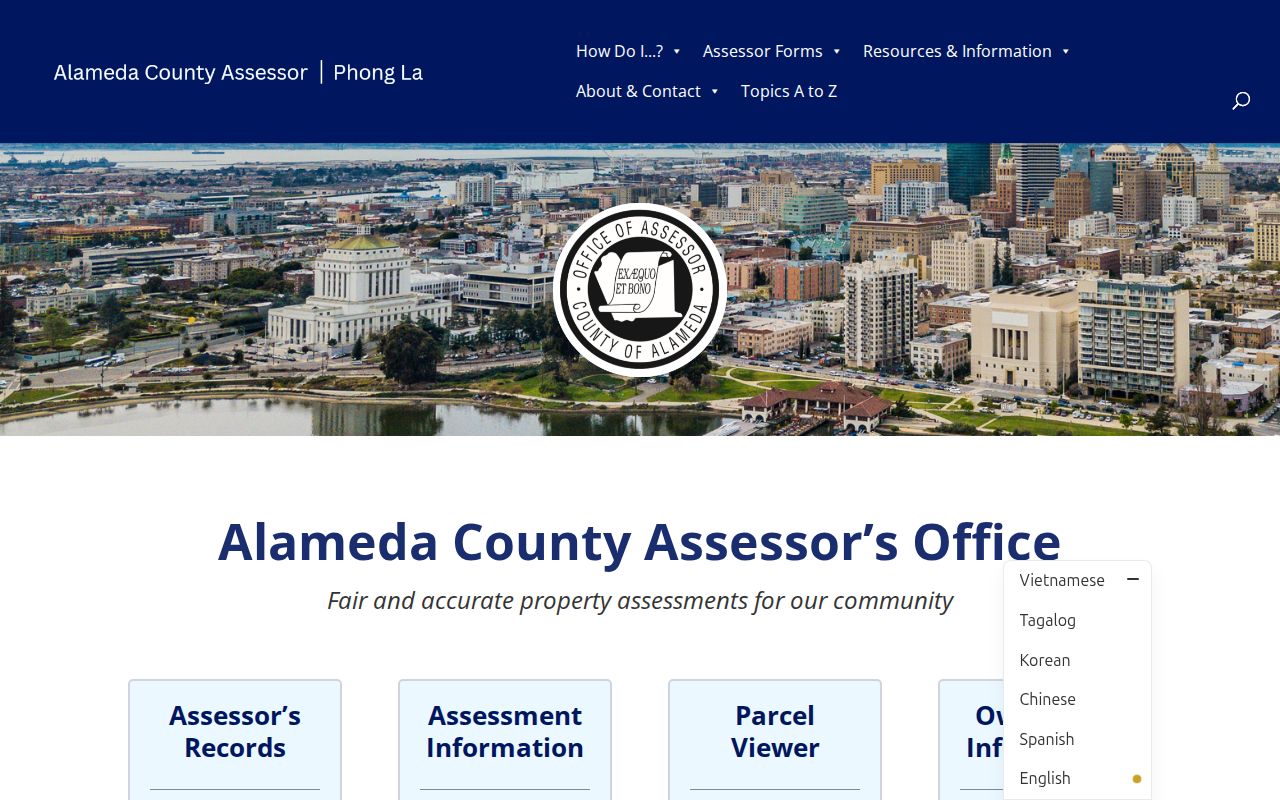
After the parcel card opens, record the APN, situs, assessed values, building facts, tax-rate area, and any visible transfer reference. A mailing address may point elsewhere, and a matching mailing and situs address supports only an owner-occupancy clue.
Newark Records Along a Street
An address-keyed Newark street record trail is really a set of linked record systems. The county assessor answers who or what is tied to a parcel for assessment purposes. GIS shows shape, jurisdiction, and nearby lots. The recorder supplies parties and legal descriptions. Newark permits add a construction timeline, while directories and census schedules can supply historic household context. The voter system is different again: it authenticates a voter or serves approved file purposes, rather than offering an open street list.
| Record set | Keeper | Address lead | Access and limit |
|---|---|---|---|
| Assessment parcel | Alameda County Assessor | APN, situs, values, characteristics | Free APN or address lookup; owner web access constrained |
| Parcel map and GIS | Alameda County GIS and Assessor | Shape, frontage, adjacent lots, jurisdiction | Free interactive map; layers can change |
| Deed and official record | Alameda County Clerk-Recorder | Named parties, legal description, recording reference | 1969-present computer index; older microfilm |
| Property tax record | Alameda County Treasurer-Tax Collector | Bill, assessment and payment clues | Parcel or bill keys; not a household roll |
| Building or planning permit | Newark Building Inspection | Permit type, date, status, some project parties | Public general search; detail varies |
| Code case or PRA file | Newark city offices | Address, issue, notice, resolution | Request an existing disclosable file; privacy redactions may apply |
The APN is the hinge between these systems. It can tie an assessor result to a map, a deed, and a permit, but it does not turn every source into proof of residence. A Newark street directory should label each result as ownership, parcel geography, building activity, recorded transfer, or historical occupancy. That simple label makes the coverage table useful without overstating what any office keeps. A street-record workflow can be precise without pretending to be a complete household roster.
Newark Street Parcels in GIS
The Alameda County parcel viewer makes a named Newark street visible as a run of polygons. Search an address or APN, zoom to the target, select its parcel, and open the attribute panel. Then pan along the road and select the lots on each side. Useful layers may include parcels, the city boundary, zoning or general-plan data, aerial imagery, flood areas, and special districts. The live legend matters because layer availability can change.
GIS is especially useful when the street has corner lots, a subdivision split, a common parcel, or condominium units. Record the target APN and the APNs beside it instead of relying on a screen view alone. A map can show that a parcel is within Newark for planning or tax geography, but it does not prove that a named person lives there or that two owners know one another.
The Alameda parcel and GIS viewer is the source shown in the Newark parcel-map image. Use the live county GIS entry point for the current map, parcel selection tools, and jurisdiction layers.
The adjacent polygons become a research list, not a social list. Open each lawful assessment result, keep unit distinctions, and send any needed deed work back through the APN and legal description. For a full named-street chain, the Newark street directory workflow continues beyond the map.
Newark Street Permits by Address
Newark Building Inspection uses eTRAKiT for a public general search tied to Building, Planning, and Public Works permits. A site address or parcel number can reveal a permit type, date range, status, and sometimes an applicant or contractor link. That evidence can place an alteration, repair, or project at a point in the address history. It does not show every occupant, and a contractor or applicant is not automatically an owner.
The public route is narrower than the transaction route. General searching does not require application privileges, while registration is required to apply, pay, or schedule an inspection. Newark's official eTRAKiT guide identifies online submission for items such as furnaces, water heaters, electrical-service upgrades, qualifying remodels, repipes, solar, minor electrical or plumbing work, pest repairs, pool demolition, and qualifying accessory dwelling units. Larger or more complex projects follow a plan-submittal path, so an empty result is not proof that an address had no work.
When the public search omits a permit or a code case, Newark's California Public Records Act channel is the fallback. Requests may be verbal, by email, phone, or in person. A focused request should name the address, record type, and date range. The city normally makes a determination within ten calendar days and may take up to fourteen more calendar days for unusual circumstances. Copies may carry the direct duplication charge in the Master Fee Schedule, and the city need not create a record that does not exist.
Keep eTRAKiT in the Newark street directory's address trail as a construction timeline. Pair its dates with the assessor parcel, the GIS polygon, and the recorder's instrument. The combination can explain why a building looks different across records without claiming that a permit list is a list of residents.
Newark Street Deeds by Party
The Alameda official-record index is organized around parties and instruments, not around a modern street browse. Once the assessor or GIS supplies an APN, find a known acquisition deed or transfer reference. Read the grantor and grantee names, recording date, instrument number, document type, and legal description. Then search the seller as an earlier grantee. Repeat the chain while checking the APN, lot, subdivision, or other legal description at each turn.
A deed image may show the instrument number, recording time, document type, grantors, grantees, transfer-tax notation, APN or legal description, return-address block, book/page or reel/image reference, and page count. The index is a locator, not a title report. A return address is a clue about a transaction and should not be treated as proof that a party lived at that address. Trusts, limited liability companies, and family transfers can also hide the natural-person trail until the recorded instrument is read.
The Alameda Official Public Records instructions explain the index, copy routes, and historical boundary. A known instrument can be ordered through the county's official-record copy-order form; the form requires the instrument number and adds a $2 convenience fee for card payment. Plain-copy pricing and certified-copy choices belong to the Clerk-Recorder's current schedule.
When the goal shifts from a whole road to one named person, the Newark resident lookup workflow is the better next step. It keeps the street work focused on address-linked evidence instead of repeating the full one-person record path.
Newark Street Index Past 1969
Alameda County official records begin in 1853, when the county was organized. The electronic computer index begins in 1969. That is an access boundary, not a claim that earlier deeds were lost. A Newark chain that reaches 1968 must move from online name searching to the Clerk-Recorder's public research area, alphabetical grantor and grantee books, microfilm, and deed books at 1106 Madison Street.
Plan the handoff before arriving at the older record. Save the latest electronic instrument, copy its party spellings, note the legal description, and ask the counter staff which older index or reel continues the chain. Search variants matter. A street label can be shorter, longer, or tied to an older township reference, while the legal lot description may stay constant. The Alameda office can explain copy mechanics, but the researcher still has to test whether two instruments describe the same parcel.
The Alameda property offices directory is the source shown in the Newark county-offices image and reflects the county-level handoff supporting parcel and recorder research. Confirm current office routes and contact details there before using an in-person channel.
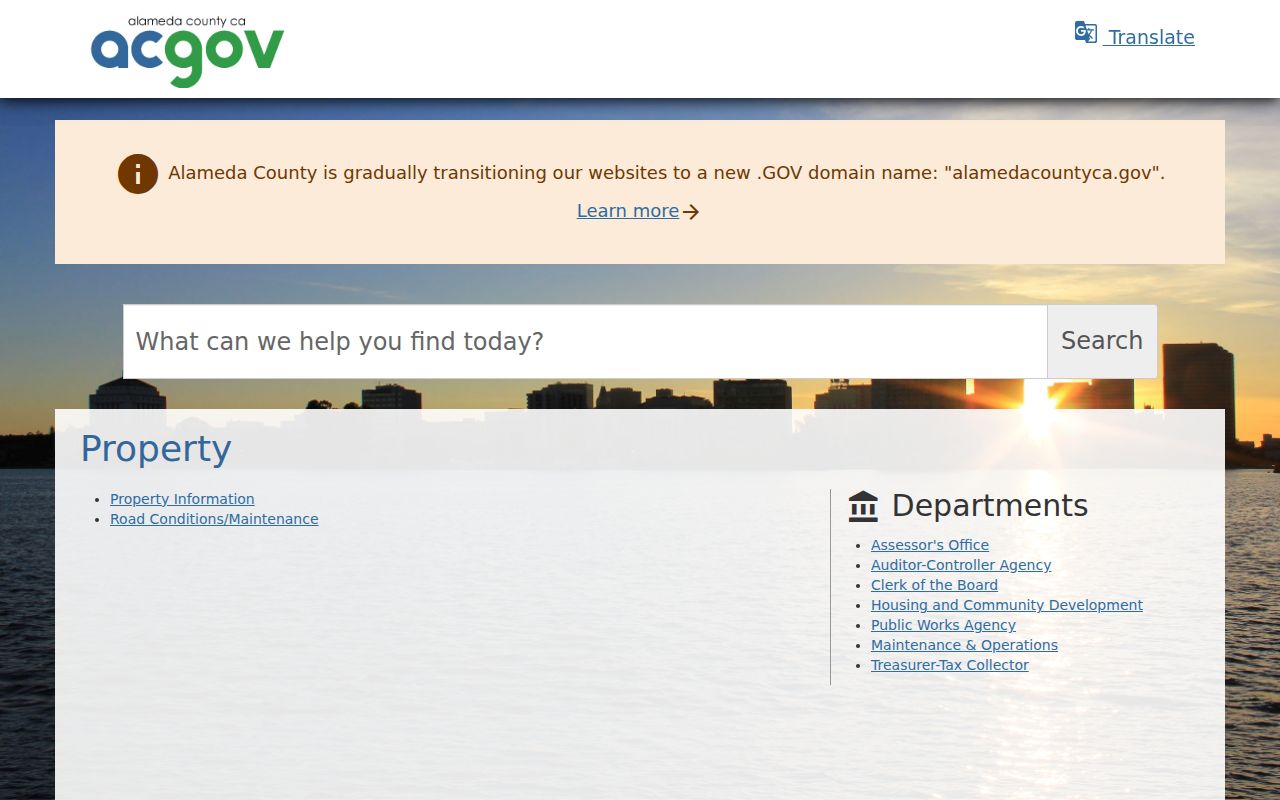
The 1969 line is also an interest point for family history. It explains why a recent owner can be easy to locate while an earlier Newark household needs a counter visit, a library lookup, or a regional directory search. The gap is procedural, not a reason to fill missing years with guesses.
Newark Streets, ZIPs, and City Lines
Newark's normal postal ZIP is 94560, but postal geography and civic geography are not the same. USPS verifies a delivery label. GIS checks whether a parcel falls inside the Newark city boundary. The assessor uses a situs address for the physical land, and the recorder's legal description carries the title trail. A mailing address may be different from the situs, and an agency database may normalize the city name in a way that does not match USPS wording.
That distinction matters on the edge of Newark, which is bordered largely by Fremont and the Bay and wetlands. Old Town's street grid reflects the 1878 town plan around Thornton and Sycamore, while the historic settlement and later subdivisions changed how records describe place. A street-record log should retain the postal label, municipal jurisdiction, APN, and historical place reference as separate fields. Do not add a nearby ZIP merely because a source uses a regional city name.
When a street record shows 94560, verify the exact address with USPS and the parcel with Alameda GIS. When the question is about a historic deed, preserve the lot and legal description even if the city line or postal label changed. This four-part check keeps a Newark address from being mistaken for a simple city-name match.
Newark Street Address Changes
Newark has no authoritative comprehensive street-renumbering table located in the research record. The safe approach is to treat a changed address as an unresolved link. Compare the APN, recorded map, subdivision, lot and block, legal description, and any city resolution instead of assuming that an old number equals a new number. The 1878 Old Town grid survives as a historic structure, but the townsite later shifted toward the railroad curve and shops near Thornton, Sycamore, and Carter.
Newark's incorporation adds another records clue. The city incorporated on September 22, 1955, and its first council met at midnight at Muller School. Streets remained declared county streets until July 1, 1956 because the new city lacked gas-tax revenue. Early road, permit, and maintenance records may therefore sit with a different custodian than a later city file. A focused request to the City Clerk or Engineering route can ask for the street-name resolution, address assignment, subdivision map, or other existing record.
Address continuity is where a street history tool becomes careful. Keep the failed search terms in your notes, then try Washington Township, regional place names, the railroad corridor, and the legal lot. A missing result may reflect a number change, a new subdivision, a regional index, or an unlocated record series. It should not be silently rewritten as proof that no household existed.
Newark Street Property Fraud Alerts
A timely reason to check the recorder trail is Alameda County's real-estate fraud notification program. The District Attorney launched the notification letter program in 2023. Its FY2024-25 report describes a notification that helped an owner discover an allegedly fraudulent transfer. The letter includes the first page of the recorded document and contact information for the Real Estate Fraud Unit.
The alert is not a resident directory and it does not replace a title review. It is an owner-protection signal that makes a newly recorded transfer worth checking against the APN, parties, instrument number, and legal description. If a Newark property owner receives a notice that does not fit a known transaction, verify the instrument with the Clerk-Recorder and use the official county or law-enforcement contact, not a number from an unsolicited message.
The county's real-estate fraud notification report supplies the local context. A Newark address trail can point a researcher to the right parcel and instrument, but any suspected fraud belongs with the recorder and the Real Estate Fraud Unit.
A Newark Street Directory in Reverse
Regional city and criss-cross directories invert the usual name-first search. Instead of starting with a person, start with the street name and number, then read the listed householder or business entry. Later reverse sections may show an address, a name, occupation, employer, spouse notation, or a mark such as `h`, `r`, `bds`, or `wid`, depending on the volume. These sources are useful for past adult occupants, but they omit unlisted people and do not establish ownership.
Newark appears in regional material because it was a small railroad and industrial community before incorporation. Catalog searches should try Newark, Alameda County, Oakland-Alameda, Hayward, Fremont, Centerville, Niles, Irvington, Mission San Jose, Washington Township, and Union City. The Alameda County Library offers genealogy databases, while the Oakland History Center holds countywide directories, voter registers, obituaries, and certificates. Its family-history service normally performs up to two lookups per month, with a phone or email response in about three business days or mail in one to three weeks.
Use a directory entry as a bridge between the current parcel chain and the historical household question. Check adjacent years, pair an address with the 1940 or 1950 census, and look for an obituary or probate record when a former owner died. For the full collection map and shelf strategy, the Newark historical city directory page keeps the historical volumes in their own lane.
What Newark Street Directory Leaves Out
A Newark street directory cannot show everyone connected to an address. The assessor identifies ownership and parcel facts, not every occupant. The voter-status page authenticates a person who supplies identity details; it is not an open name list. A voter street index or file requires an authorized purpose under Elections Code sections 2180 through 2194.1 and related regulations. It must never be presented as a way to browse every voter on a road.
DMV address information is protected by the federal Driver's Privacy Protection Act and California rules. Utility accounts, delivery data, private club lists, congregation membership, and household details are not public street directories. Safe at Home gives qualifying survivors and certain public-facing workers a substitute address with confidential forwarding. Court orders, sealed files, redactions, minors, common names, and missing directory years can also limit what a lawful search can establish.
- Parcel
- A mapped piece of land identified by an APN and related assessment record.
- Situs address
- The physical location of the parcel, which may differ from the mailing address used for notices.
- Plat
- A recorded map that shows a subdivision or lot layout and helps connect old and new address labels.
- Criss-cross directory
- An address-first section that can list a householder or business by street and number.
Lawful use. Newark address and street records are for personal, lawful research, family history, property curiosity, and civic use. Using records to stalk, harass, intimidate, or harm anyone is prohibited, and protected addresses must never be defeated.
When a source seems wrong, correct the source with its custodian. Ask the Assessor about parcel data, the Clerk-Recorder about an instrument, Newark about an existing permit or city file, and the Registrar of Voters about a voter record. A careful address directory preserves the difference between a public clue, a confirmed record, and a question that remains unanswered.