
Newark Neighbors by Block
A block lookup is a comparison of sources, not one master list. A Newark neighbors lookup starts with the target address, identifies its parcel and city boundary, then asks what the nearby record can actually show. GIS identifies adjacent polygons. The assessor describes parcel facts and ownership access. Deeds follow named parties. eTRAKiT dates work at a site. Restricted voter files require an approved purpose. Reverse directories, census schedules, and voluntary groups can add older or community context.
| Source | What It Shows About a Block | Access |
|---|---|---|
| Alameda parcel viewer | Lot shapes, APNs, situs addresses, adjacent parcels, jurisdiction layers | Free map browse and parcel selection |
| Alameda Assessor | Assessment facts, values, structure clues, and ownership lead where lawful | APN or address search; owner-name web access constrained |
| Recorded deeds | Parties, legal descriptions, and each parcel's transfer trail | Party index and instrument copies; older index offline |
| Newark eTRAKiT | Permit type, address or APN, dates, status, and some project parties | Public general search; registration for transactions |
| Restricted voter street index | Registered voters or precinct data allowed by law | Application and permitted purpose, not open browsing |
| Reverse directory and census | Past listed occupants and enumerated households | Library databases, archives, and released schedules |
| Neighborhood Watch | Voluntary block contacts, meetings, and safety information | Join through Newark Police; roster not published |
Owners are not the whole household. A parcel result may identify an owner or entity, while a directory may list one adult and omit others. A census is a point-in-time enumeration. A community group knows only people who choose to take part. Label each clue as parcel, party, listed occupant, authenticated voter, historical household, or voluntary contact.
Map Newark Neighbors by Parcel
The Alameda County parcel viewer supports an adjacent-polygon method. Search the target address or APN, zoom until the lot lines are clear, select the target polygon, and open its attributes. Then click the parcel on each side and the parcel across the street. Pan along the block rather than resetting the search. The goal is a clean list of APNs and situs addresses that can be checked one by one.
- Locate the Newark address in the Alameda County GIS and parcel viewer.
- Record the target APN, situs, jurisdiction, street frontage, and any subdivision or unit clue.
- Select each adjacent polygon and note its APN and situs without merging corner or common parcels.
- Open the lawful assessment result for each parcel and separate owner, mailing, and physical-location fields.
- Use deeds, permits, or historical sources only after the parcel list is stable.
Available controls may include identify or select, a layer list, an aerial basemap, zoom, and measure tools. Useful layers can include parcels, the Newark city boundary, zoning or general-plan data, flood areas, and special districts. Layer names and availability can change. Save the APN and source date, not just a screen impression.
For the full chain of one named road, the Newark street directory takes the address from parcel to permits, deeds, and historical directories. The block workflow stops at the immediate radius and its community layer.
Newark Neighbor Records and Households
The assessor's parcel card can show APN, situs address, use or type, land and improvement assessed values, total assessed value, tax-rate area, transfer references, building facts, exemptions, and a map link where published. It identifies an ownership or assessment relationship, not every person at the address. California Government Code section 6254.21 also limits internet display of some owner information, so a Newark block lookup should not promise an unrestricted owner-name web search.
Situs means the physical property. Mailing means where an assessment notice is sent. A different mailing address can place an owner away from the parcel; a matching address can support an owner-occupancy clue. Neither proves the full household. Trusts, limited liability companies, family transfers, and common names require the recorded deed and legal description before a person is linked to a lot.
eTRAKiT adds a building timeline, not a household list. A public general search can use a site address or APN and may expose permit type, dates, status, applicant, or contractor. Registration is required for applications, payment, and inspection scheduling. If a public search is incomplete, a focused Newark Public Records Act request may be made verbally, by email, phone, or in person. The city normally makes a determination within ten calendar days and may add up to fourteen days for unusual circumstances.
Restricted Newark Neighbor Voter Files
California My Voter Status is an identity-authenticated service, not an open Newark resident directory. The form asks for a first name, last name, date of birth, and portal-dependent identity details such as a driver's license or state ID and the last four digits of a Social Security number. The authenticated voter may see polling place, sample ballot, vote-by-mail status, language choice, and districts. Those fields do not create a public list of everyone on a block.
A voter file or street index is a separate access channel. Elections Code sections 2180 through 2194.1 and title 2 regulations restrict copies and permitted use. An application may ask for the applicant, organization, physical and mailing address, phone, email, identity verification, county scope, file components, purpose, beneficiary or vendor, delivery method, agreements, and certification. Confidential voters and preregistered minors are excluded, and misuse can be a misdemeanor.
The California My Voter Status image shows the self-service identity route used by a voter, not a block-browse tool. Use the live California lookup for the current form and access rules.
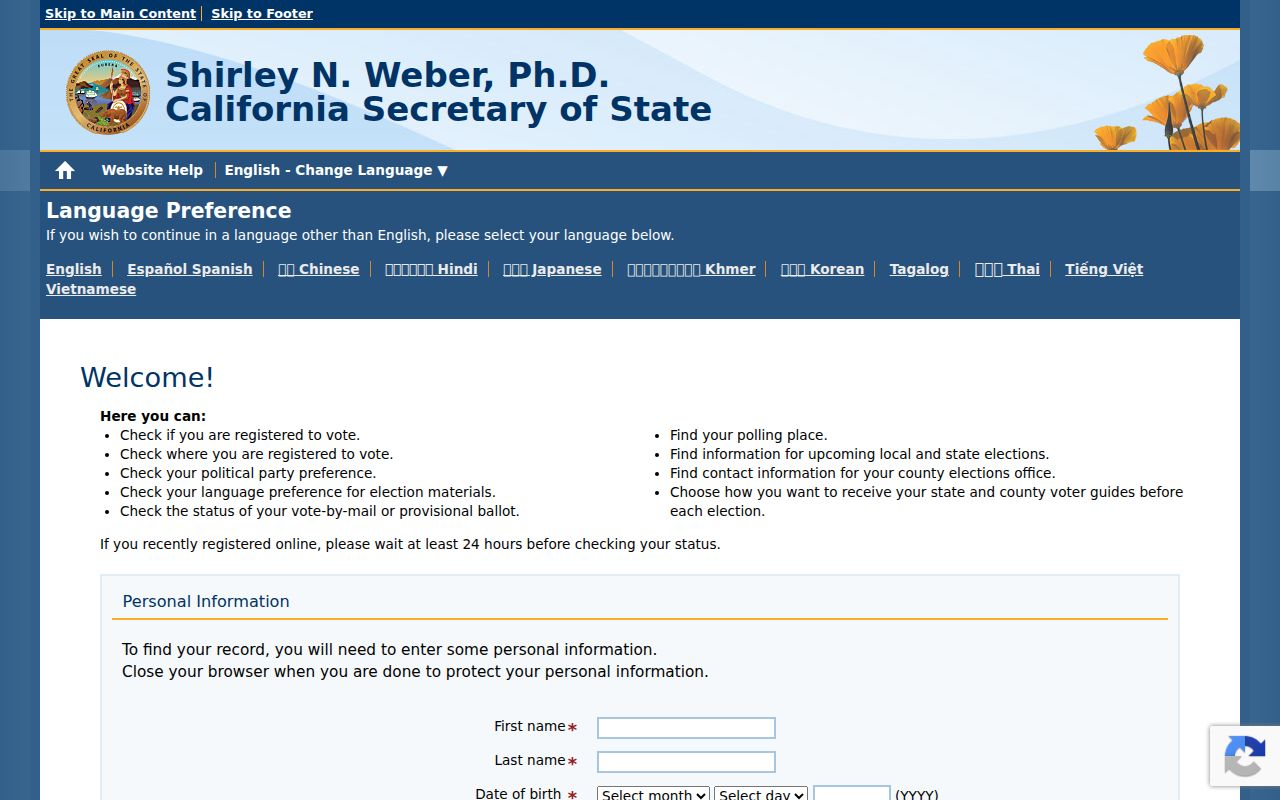
The image belongs beside the restriction because an authenticated personal profile and a permitted-purpose file are different products. A street-level Newark block search must never turn voter data into anonymous browsing.
Newark Neighbors and Watch Contacts
Newark Police invites residents to form Neighborhood Watch groups. The community process starts with nearby households, a meeting date, and a contact with the Community Engagement Manager. Each group designates a Block Captain as a liaison. Meetings can cover local trends, training, and information exchange. The city recognizes the network, but membership and contact lists are voluntary and rosters are not published as a public directory.
Neighborhood Watch
Start with nearby households and choose meeting dates.
510-578-4929
Block Captain
Designated liaison for trends, training, and information exchange.
510-578-4929
Voluntary Programs
Business Watch, Dog Walker Watch, National Night Out, Map Your Neighborhood, NIXLE, and graffiti volunteers.
These contacts add a community path to a Newark block lookup, but they do not reveal who belongs to a particular block. Ask how to join or attend through the city channel. Do not infer membership from a parcel, a business address, or a public meeting mention.
Community Layers for Newark Neighbors
Beyond official rolls, Newark has voluntary and place-based layers. Old Town Business Association and Newark Chamber contacts describe organizations and businesses, not private household rosters. The research did not locate an official comprehensive Newark HOA or member directory. Congregation, club, delivery, utility, and private association membership remains private unless a person or organization chooses to publish it or lawful disclosure applies.
For local connection, use the Neighborhood Watch route, public meeting notices, city community programs, and organizational contact pages. A group can help a resident learn about a block without becoming a name list. The same distinction protects people who attend a meeting once, change addresses, or prefer not to publish a contact.
Historic community resources can add context without exposing a current neighbor. The Oakland History Center, Alameda County Library, local newspapers, and the Washington Township Museum hold directories, obituaries, photographs, maps, and local files. Those sources can explain a place or former household, but their holdings and access terms must be checked item by item.
Newark Neighbors: Official Rolls Compared
Official sources and commercial neighbor compilations serve different purposes. A county parcel result has a custodian and a defined field set. A voter profile authenticates the user. A custody or registry tool covers only a purpose-limited population. Commercial compilations may combine property, voter, former-address, and relative data, then present an uncertain match as if it were a current neighbor.
| Source type | Best block clue | Boundary to keep |
|---|---|---|
| GIS and assessor | Parcel shape, APN, situs, assessment facts | Owner or parcel evidence is not a whole-household record |
| Recorded deed | Named parties and transfer history for one lot | Party index is not an address-indexed resident roll |
| Voter service or permitted file | Authenticated status or lawful election data | Restricted access and purpose rules bar open neighbor browsing |
| Commercial neighbor compilation | Possible lead across mixed data sources | Stale, merged, or misidentified records need independent verification |
Use a commercial result, if encountered elsewhere, only as an unverified lead and not as a certified record. The stronger method is parcel by parcel: check the APN, read the custodian's fields, note the date, and stop when the source's boundary is reached. A current address, a former occupant, and a relative are not interchangeable.
Official state tools have the same rule. A custody locator can answer whether a public custody record matches a name and identifier. A registry can display a legally defined profile and map result. Neither is a universal history of a person or a list of all Newark households.
Purpose-Limited Newark Neighbor Tools
Some official tools may appear during a block search, but each covers a narrow purpose. The Alameda County Sheriff Inmate Locator accepts a name and, where available, booking identifiers. Its result concerns jail custody and booking data, not a conviction or a full history. The California Department of Corrections and Rehabilitation locator covers the state prison population through a name or CDCR number. These tools should never be used to label a neighbor beyond the record they actually display.
The Alameda inmate locator image shows the county custody route that can answer a current, limited records question. The live Sheriff locator controls the current fields, disclaimers, and public result.
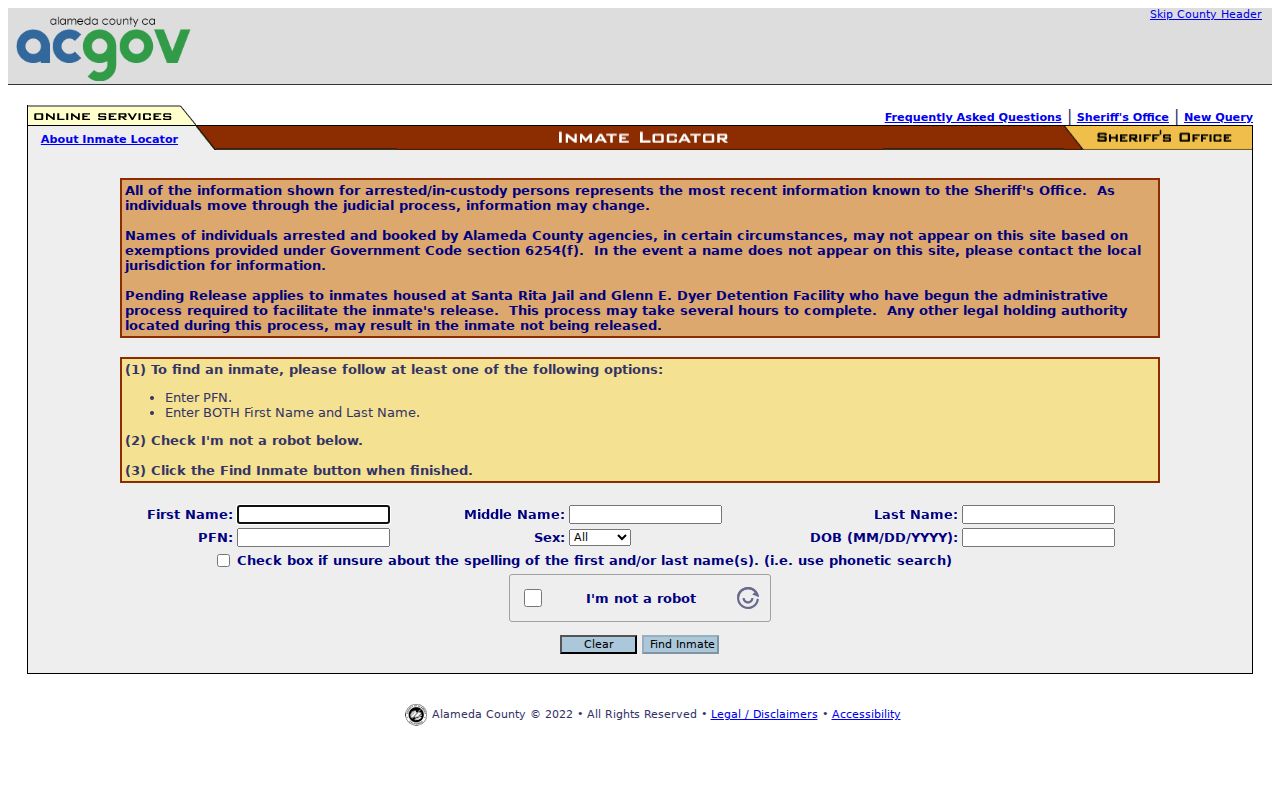
Its place in a block workflow is narrow: a name match must be corroborated with age, identifier, or another lawful fact, and custody is not a resident address.
The California Megan's Law search image represents a separate registry with name and map or area search. Read the portal's use warning before relying on a result.
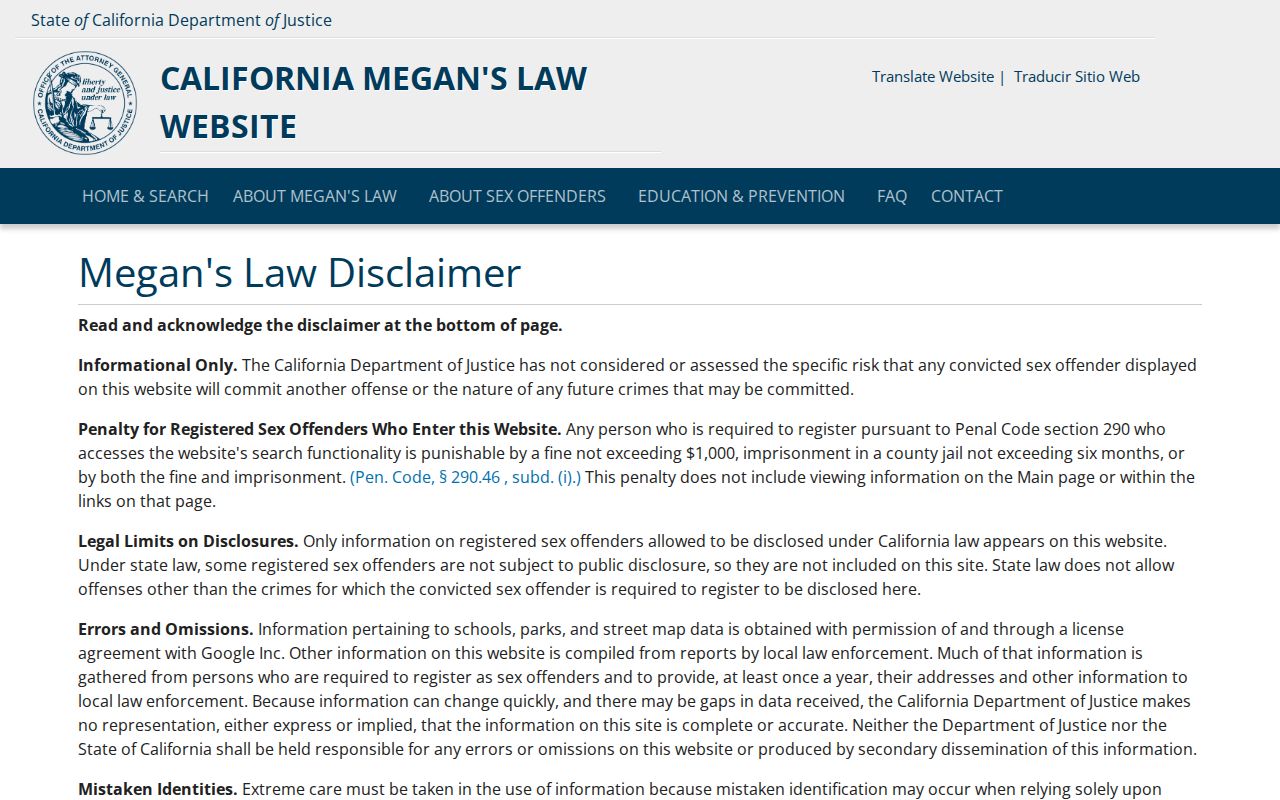
Megan's Law information is for lawful protective purposes and carries explicit warnings against harassment, threats, or discrimination. A registry profile is not a complete criminal history, and exclusions or limits may apply.
Newark Neighbors in Block History
Newark's block geography has a useful local story. Old Town's 1878 grid sits near Thornton and Sycamore, while the townsite shifted toward the railroad curve, station, roundhouse, and shops near Thornton, Sycamore, and Carter. Newark incorporated on September 22, 1955. Earlier sources may use Alameda County or Washington Township, and later subdivision records may connect a block through a recorded map rather than a street label alone.
The Oakland History Center is a countywide fallback with directories from 1869-1943, Alameda County voter registers from 1867-1944, obituaries from 1951-1993, and related certificates. Its family-history service normally performs up to two lookups per month and responds by phone or email in about three business days or by mail in one to three weeks. Coverage must be verified before assuming a Newark block appears in a given volume.
The Oakland History Center image shows the regional archive route used when a Newark block needs historical directory, voter-register, obituary, or certificate context. The collection is a fallback for past records, not a current neighbor roster.
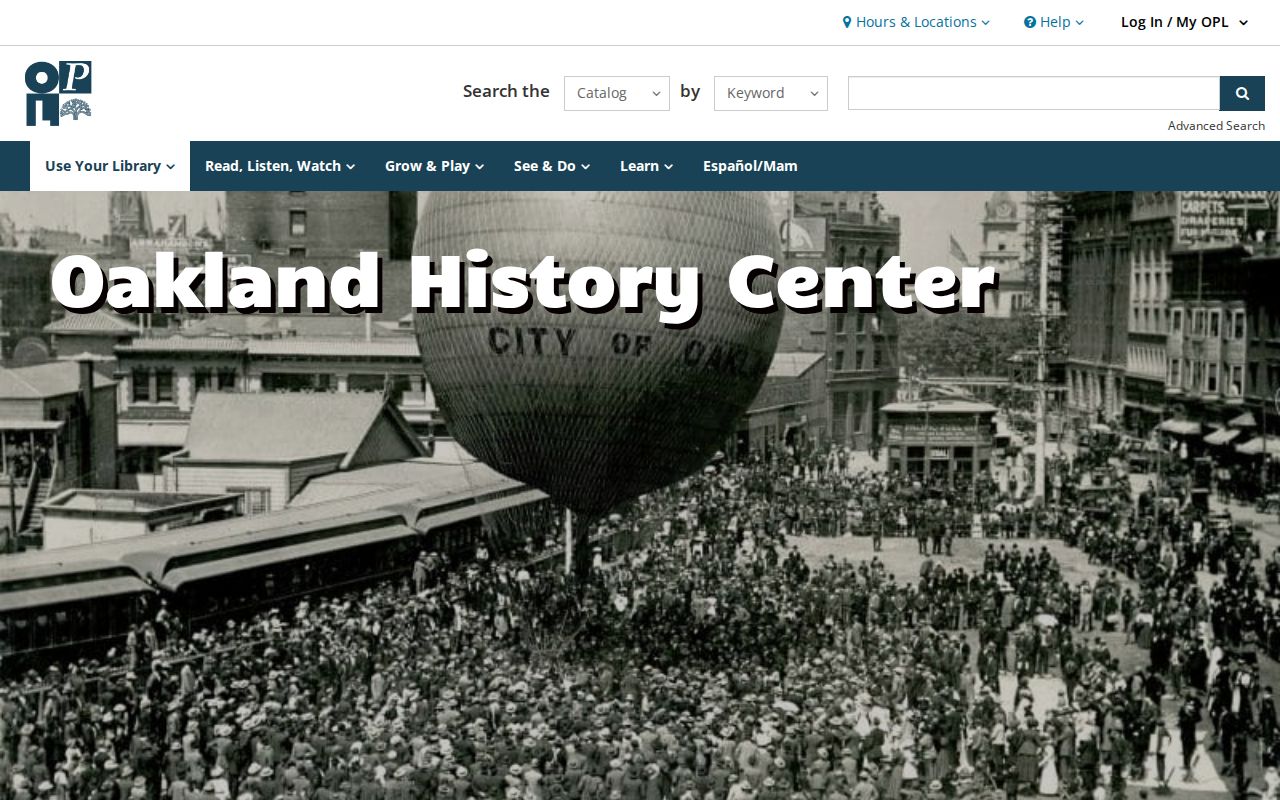
Pair any old address clue with an APN, recorded map, census schedule, or directory entry. A historic photograph or story can explain a building and its setting, but it should not be read as proof of every person who lived on the block.
Privacy Limits for Newark Neighbors
An address-based block search cannot reveal utility accounts, delivery routes, private association membership, most household members, minors, or a protected person's real address. Safe at Home gives qualifying survivors and certain public-facing workers a substitute mailing address with confidential forwarding and protections across participating agencies. Court orders, sealed files, redactions, and voter restrictions can make a block appear less complete by design.
Parcel adjacency does not establish a relationship. A recorded owner may live elsewhere. A voter may be inactive, confidential, or absent from a self-service result. Neighborhood Watch is voluntary and its rosters are unpublished. No official comprehensive HOA directory was located for Newark. These gaps are safeguards and source boundaries, not invitations to combine private data from other channels.
Lawful use. Newark neighbor research is for getting to know the block, reconnecting, civic curiosity, and personal safety awareness. Using records to stalk, harass, intimidate, threaten, or harm anyone is prohibited, and protected addresses must never be defeated.
California stalking and harassment rules, including Penal Code sections 646.9 and 653.2, give the privacy limit real force. Use the least amount of information needed for a lawful purpose, verify each source with its custodian, and stop when the record is protected or the question has no public answer.