
Newark City Directory Holdings
Newark's city-directory problem is regional. Before incorporation in 1955, the community was a small railroad and industrial place within the wider Washington Township landscape. A bound volume may therefore describe Newark as a place served by an Alameda County, Oakland-Alameda, Hayward, Fremont, or Washington Township directory instead of using Newark in its title. The table separates dependable coverage facts from places where the catalog still needs a librarian's check.
| Collection | Years | Where Held | Access |
|---|---|---|---|
| Regional city and county directories | Exact Newark-bearing run not published | Alameda County Library catalog and branches; established digitized collections; Oakland History Center | Ask staff to confirm the volume and Newark coverage |
| Alameda County official land records | 1853-present; microfilm 1853-1968, electronic index 1969-present | Alameda County Clerk-Recorder in Oakland | Online index for newer records; office research area for older indexes |
| Newark photographs and place histories | Late 19th century onward, item-dependent | Newark history collection | Online context; verify names against records |
| School yearbooks and local files | Exact runs not listed online | Alameda County Library, schools, and Washington Township Museum | Catalog or archive inquiry before a visit |
| Federal census schedules | 1790-1950 currently public | NARA, Ancestry Library Edition, and HeritageQuest | Household and address clues, not a continuous directory |
No official source in the research set publishes exact Newark-bearing year runs for the regional directory or reverse-directory shelf. That gap is a result, not a reason to invent publishers or years. Record the catalog wording, ask for Newark as a place served, and note whether the item is a name-order volume, a street-order criss-cross volume, or a general phone book.
Search Beyond Newark City Directory
Older residents can disappear when a search uses only the modern city name. A Newark city directory search should test Washington Township, Centerville, Niles, Irvington, Mission San Jose, Fremont, Union City, or Alameda County. These terms reflect changing local geography, not proof that a person lived in every place returned. Start with Newark, then widen one term at a time and keep the exact source label with each find.
The regional approach also fits Newark's town story. Mayhew's Landing, ranch subdivision, reclamation, and the South Pacific Coast Railroad tied the settlement to a broad trade and travel network. Directory publishers followed that network. A household near the practical town center may be listed under a regional heading even when the address sits in present-day Newark.
Use spelling variants for surnames, initials, compound names, and married or birth names. Search a street name without assuming that its present form existed in the same period. If a directory result names only a business or landmark, treat it as an address anchor and move to the next source rather than calling it a resident entry.
Newark Library City Directory Access
The Newark Library branch listing places the closest Alameda County Library branch at 37055 Newark Boulevard. Its published contact details are 510-284-0675 and newarklibrary@aclibrary.org. Hours are Monday and Tuesday noon to 8, Wednesday and Thursday 10 to 6, Friday closed, Saturday 10 to 5, and Sunday 1 to 5. Those hours matter because a directory question may need a staff lookup, a catalog check, or a database terminal rather than a quick web search.
The Alameda County Library genealogy resource shelf includes Ancestry Library Edition in branches, HeritageQuest for census and local histories, Newspapers.com Library Edition, HeritageHub obituary and death notices from 1704 onward, NewspaperARCHIVE, Hispanic Life in America, and My China Roots. Argus Fremont-Newark coverage is searchable from 2001 to the present with a library card. These resources can supply an index lead when the regional catalog gives no year run, but an index hit is not a page image or a certified record.
The library website does not publish an itemized Newark directory shelf. Ask for a search under every regional term, request the title page and abbreviation key when a volume is found, and ask whether a reverse section is bound into the same book. If a database is available only inside a branch, save the citation and volume details before leaving.
The Alameda County Library genealogy resource page is especially useful for Newark family history because My China Roots and Hispanic Life in America add search paths beyond a single spelling system. A name can be checked in newspapers, obituary notices, census material, and directories without treating any one database as a complete Newark roll.
The Alameda County Library genealogy resource page shows how the database shelf fits beside local staff help and catalog work.
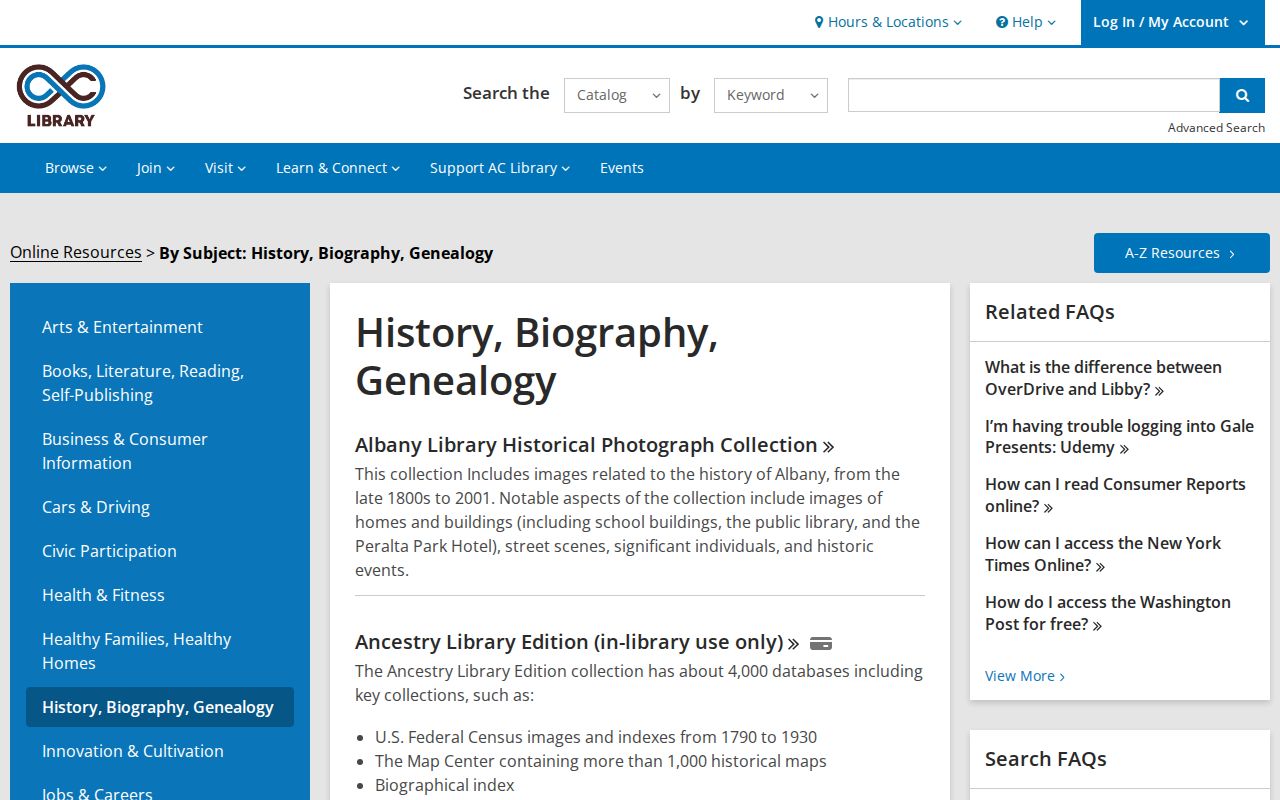
That mix of branch access and licensed databases is the practical first stop when a Newark directory year is not exposed by the public catalog.
Washington Township Directory Research
The Washington Township Museum of Local History at 190 Anza Street in Fremont is the strongest hyperlocal fallback for Newark, Fremont, Union City, and former Washington Township material. Its noncirculating holdings include rare and recent books, yearbooks, newspapers, original documents, clipping and research files, maps, and blueprints. The photograph archive contains thousands of images, with some records in PastPerfect, Archive.org, and California Revealed. Public-hours and appointment research is available at 510-623-7907.
Named holdings include the Washington High Washingtonian, Thornton Junior High Roundup, Irvington Elementary Evergreen, selected assessor books from 1893-1902, California Nursery ledgers, and recordings from the 1970s-1990s. These are not a single continuous Newark directory, yet they can connect a name, school, place, or parcel clue to the right year. Ask staff which items are open and whether a requested file has a catalog record.
The Museum's Newark Then-and-Now collection supplies useful place anchors: St. Edward church and school on Thornton Avenue, the Pacific Land and Improvement office or possible first Newark library on Filbert Street, the State Bank Newark Branch, and Swiss Park on Mowry Avenue. The anchors help reconcile a photograph or clipping with a regional directory entry. They do not establish a current resident or replace a deed, census, or vital record. The collection is a companion to a Newark city directory, not a substitute for one.
The Washington Township Museum research page is the access point for its local files, photographs, maps, and appointment details.
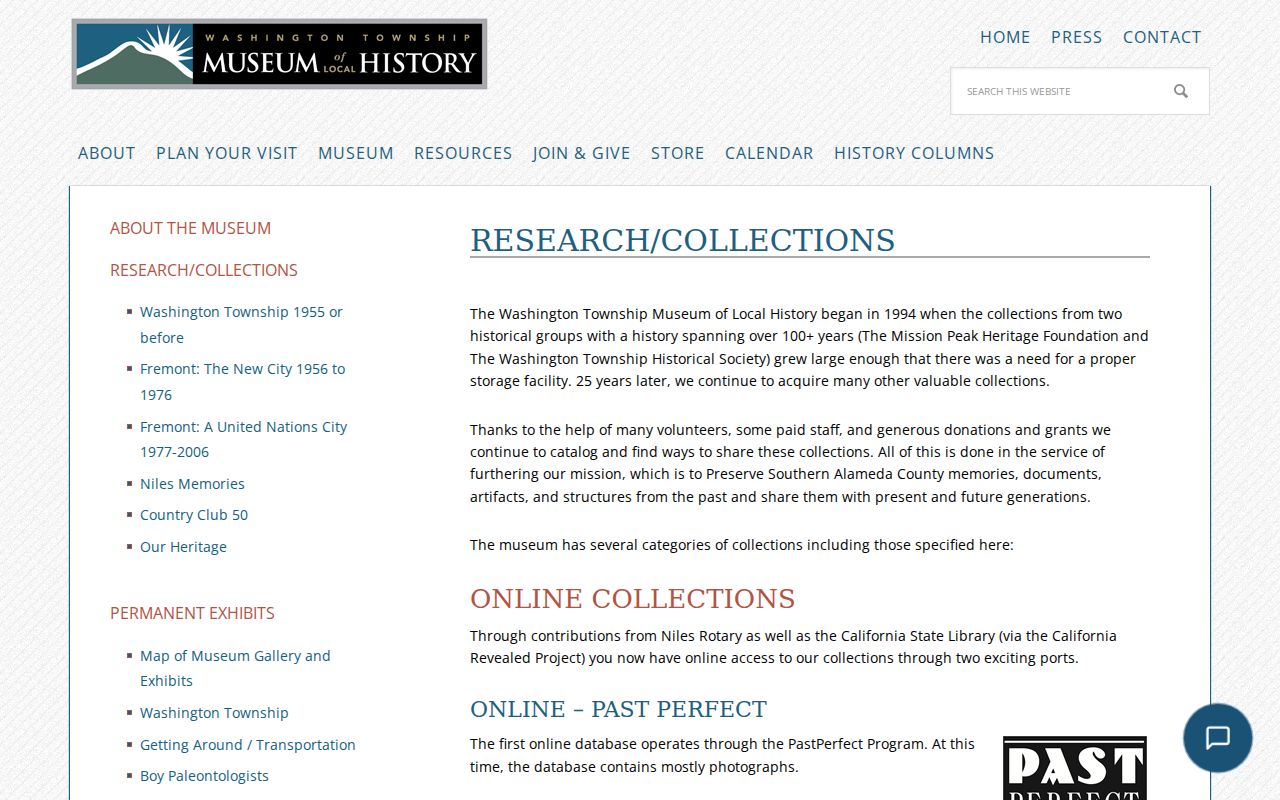
The Museum's regional scope explains why a Newark directory search often succeeds only after the catalog term changes from city name to township or neighboring historic place.
Decode a Newark Directory Entry
A regional directory entry is a compact clue set, not a full household record. The name-order line in a Newark city directory may give a surname, given name or initial, spouse in parentheses, widow notation, address, and sometimes an occupation or business line. Later volumes may add an address-keyed reverse section. Read the title page and abbreviation key first, because a short mark can change the meaning of the line.
| Name line | Surname followed by given name or initial; a spouse may appear in parentheses. |
|---|---|
| Family notation | Widow wording or a spouse reference can provide a genealogy clue, but it is not proof of every family member. |
| Address line | House number and street are the main bridge to a parcel, map, census line, or later directory. |
| Role line | Some volumes include an occupation, trade, or business affiliation that can separate same-name entries. |
| Residence mark | A book-specific mark may distinguish a home, room, or board address; do not treat it as a title record. |
- Criss-cross directory
- A later address-order section that turns street name and number into a listed householder or business clue.
- Householder index
- An alphabetical list centered on the adult named by the publisher, not a complete list of everyone at the address.
- Abbreviation key
- The volume's legend for short marks such as h for home, r for resides or rooms, bds for boards, and wid for widow.
Keep a transcription of the whole line, not just the name. A missing spouse, a changed initial, or a street number that shifts by one digit can decide whether two entries belong to one person.
Newark Criss-Cross Directory Method
Reverse searching starts with the address rather than the surname. Find the street in the criss-cross section, read each listed number in sequence, and then return to the alphabetical section for the full entry. This method is useful when a family name is misspelled or when an old street label is easier to recognize than a person's name.
Use the method with restraint. Regional volumes can omit boarders, children, and people who did not meet the publisher's listing practice. A one-year disappearance can mean a move, death, nonparticipation, a street change, or a missing volume. Compare adjacent years before drawing a conclusion.
For current parcel work, a directory clue should hand off to the Newark street directory, where an address can be compared with the assessor, GIS, permit, and deed chain. The historical reverse section remains the better tool for an older adult occupant, while the modern parcel system answers a different question.
Pair Newark Directories with Census Years
Directories fill the years between federal census schedules. A Newark city directory may place an adult at a street address in one year, while the 1940 or 1950 census can show the household, relationship, age, birthplace, and other context at the nearest released interval. The two records should be compared, not blended. A directory is a publisher's list; a census is an enumeration with its own boundaries and rules.
- Write down the directory year, volume title, page, street spelling, name variants, spouse or widow mark, and every address clue.
- Search the matching census year through NARA, Ancestry Library Edition, or HeritageQuest, then test the nearest prior and later schedule when the address does not match.
- Compare household relationships and birth details before treating a same-name entry as the same person.
- Use newspapers, HeritageHub notices, probate, or a later directory to explain a move, death, or gap.
Released census schedules reach through 1950 under the 72-year framework described by the National Archives. Later household questions need a different lawful source, such as an available directory, newspaper, family-held record, or custodian response.
Newark City Directory Railroad Context
Newark's townsite moved toward the railroad curve and the shops near Thornton, Sycamore, and Carter. The local history runs from Mayhew's Landing and the Mayhew Ranch through reclamation, the Green Point plans, Robertson's naming of Newark, and the South Pacific Coast Railroad. Newark's official history page provides the civic context for those place changes. That movement explains why a directory clue may be tied to a regional place heading rather than to the incorporated city.
Old Town's 1878 grid gives the search a fixed frame. Photographs, maps, business files, and directories can be compared against the preserved street orientation, then tested against a recorded map or parcel description. Railroad, salt, stove, foundry, dairy, nursery, and later manufacturing references can distinguish same-name entries when the address line is incomplete, but a contextual clue still needs a second source.
Newark incorporated on September 22, 1955. Early city records begin around that civic change, while county deeds, census schedules, and regional directory material reach farther back. That difference is why a historical search should name both the current city and the older county or township setting.
Newark Directory Gap and Fallback
The exact Newark-bearing year runs were not published by the official Alameda County Library website, and an authenticated sample Newark entry was not available without catalog or database access. The same caution applies to a confirmed standalone Newark Sanborn run. A careful researcher states the gap, preserves the search terms used, and asks a librarian or archivist to verify the shelf rather than filling the space with a guessed Polk or Haines sequence.
Oakland History Center is the countywide fallback. Its holdings include Oakland directories from 1869-1943, Alameda County voter registers from 1867-1944, county histories, Oakland birth and death certificates from 1870-1904, biographical files, and obituaries from 1951-1993. Its family-history service allows up to two lookups per month, normally replying by phone or email within three business days, or by mail in one to three weeks. Coverage must still be checked before assuming Newark appears.
When a directory find needs a present-day identity check, the Newark resident lookup can pair the historical clue with current official sources. That handoff keeps the historical volume in its proper role: a valuable index and address lead, not a complete resident roll.